
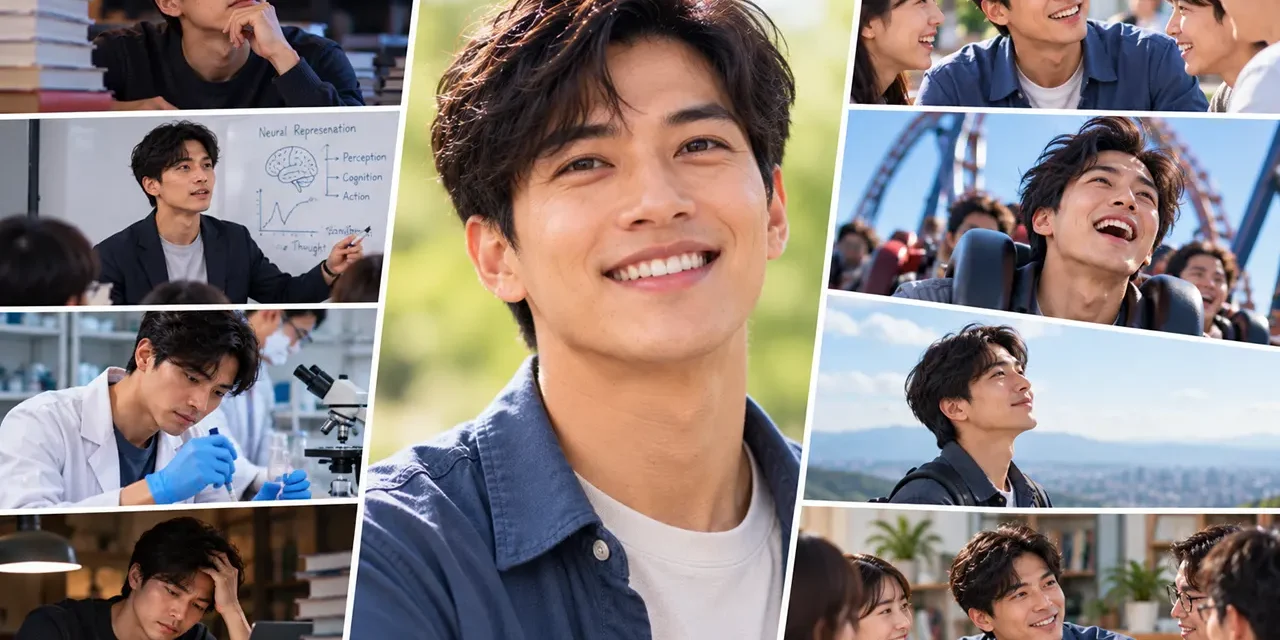
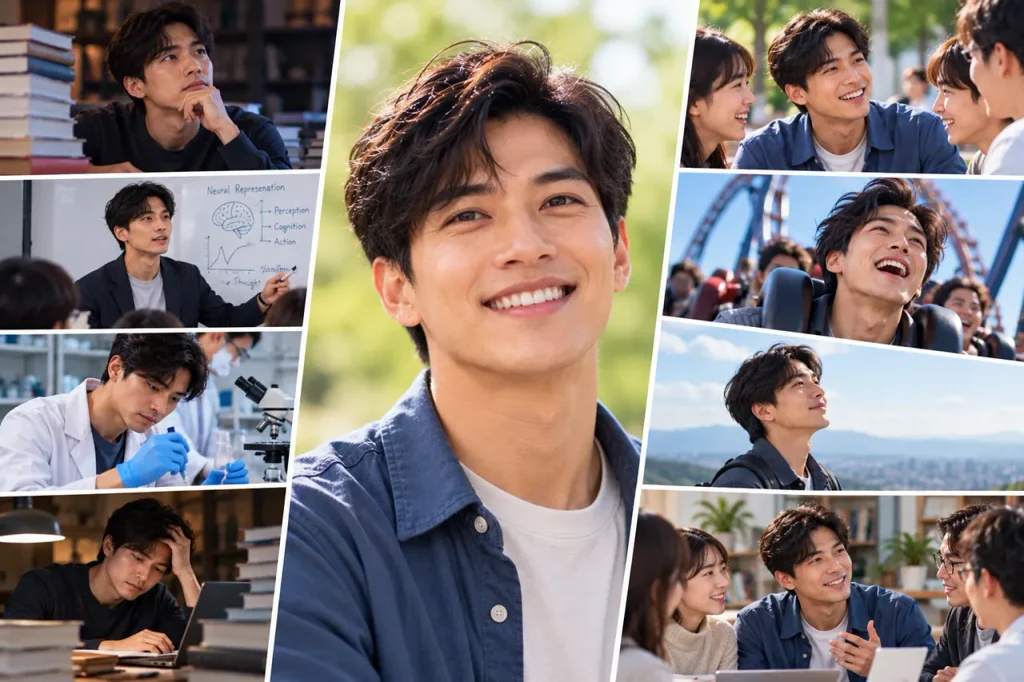
For as long as he could remember, Min G P. felt as though he had been assigned a lifelong personal homework assignment. While other people seemed perfectly happy living their lives without overthinking, his mind was constantly consumed by heavy, philosophical questions: “How do human beings perceive the world? How does creative thought arise?”
As a Ph.D. candidate at the prestigious Seoul National University, deep thinking was part of his job description. But in his personal life, this relentless existential curiosity created a profound sense of alienation. He felt fundamentally different from everyone else—like oil and water that could never truly mix.
This is the story of how an isolated, anxious researcher used meditation to answer the unanswerable questions of life and death, cure his fear of failure, and discover that the world is far more peaceful than he ever imagined.
The Burden of the Unanswered Mind
Because Min’s mind was endlessly spinning with philosophical questions, he struggled to connect with others. Meeting unfamiliar people felt deeply uncomfortable and utterly exhausting. Aside from a few close friends who genuinely understood him, he remained socially isolated. His severe lack of social confidence even became one of his parents’ greatest worries.
He was trapped inside a labyrinth of his own thoughts. But when he began practicing meditation, he experienced a radical paradigm shift.
The countless questions he had carried about the world didn’t require more logic or endless reading to be solved; instead, they simply began resolving themselves through profound, quiet realization. Years of deep-seated confusion dissolved. He never imagined that difficult philosophical concepts and endless internal turmoil could suddenly become so crystal clear.
A Shift from “Self” to “Others”
This new understanding of the world completely rewired the way he lived. Instead of remaining trapped inside thoughts centered entirely around “himself” and his own existential dread, he started looking outward.
“I want to do something that can genuinely help others,” he realized.
As he systematically let go of his ego and his fears, his social anxiety vanished. Little by little, meeting new people actually became enjoyable, and he grew to love environments filled with people. The strange sensation of his “self” disappearing gave him the space to understand others more deeply than ever before. He realized the profound, inherent value of every single human being. For the first time, he found himself wanting to care for people and help them in small everyday situations, entirely without expecting anything in return.
Redefining Failure in the Laboratory
Meditation also revolutionized his graduate school experience. Doctoral research fundamentally involves attempting things no one has ever tried before to discover entirely new truths. In this environment, failure is not just an option; it is the norm. Out of ten experiments, nine will usually fail.
During these repeated failures, many researchers suffer intense stress, burnout, and declining health. Min used to be one of them. But after practicing meditation, he gained enough mental space to stop connecting temporary laboratory failures with personal fear or despair.
Instead of panicking when an experiment went wrong, he could calmly observe the data and search for new methods and solutions. This unshakeable mindset had a beautiful ripple effect: as he remained calm, the younger graduate students around him also became less anxious and much more relaxed during their own grueling experiments.
The Amusement Park Epiphany
To explain his transformation, Min uses the metaphor of an amusement park ride. He always liked rides that featured sudden, massive drops. But as the ride slowly clicked upward, his mind would flood with anxious thoughts: “Is this safety device really secure? What if the machine breaks? What if there’s an accident?”
As the ride climbed higher, his heart would pound with the terror of an unfamiliar situation. When the sudden drop finally came, he would grip the safety bar with white knuckles, tensing his entire body against the fear, thinking, “Why did I even get on this thing?”
But one day, he realized something important: the ride was actually far safer than his panicked fears suggested. When he finally forced himself to relax his grip and entrust himself fully to the fall, the terrifying drop transformed into a deeply enjoyable feeling of weightlessness. That freedom from gravity felt like flying, bringing tremendous exhilaration and peace simultaneously.
Awakening to the True Self
“Through meditation, I realized that the world is not a dangerous or frightening place,” Min reflects. “It is actually an incredibly peaceful place. When I stop resisting and simply entrust myself naturally to the flow of life, I realize that this very moment is already the most precious and happiest moment.”
By emptying his mind, he found the answers to life and death, and awakened to how human beings are truly meant to live.
Min G P.’s 3 Insights on Existential and Academic Stress
1. The False Self is a Caterpillar “Every human being possesses an original and complete true self. But just as a caterpillar cannot become a butterfly without passing through transformation, we cannot discover our true nature while remaining trapped inside the false, anxious self called ‘me.'”
2. Disconnect Failure from Despair “In research—and in life—failure is incredibly common. Stress happens when we attach our ego and our fear to those failures. When you create mental space through meditation, a failed experiment is just data, not a reason to despair.”
3. Stop Resisting the Drop “We spend our lives gripping the safety bar, terrified of what might go wrong. But the world is inherently peaceful and safe. When you let go of your resistance and entrust yourself to the present moment, the anxiety disappears, leaving only the exhilarating weightlessness of true freedom.”
