
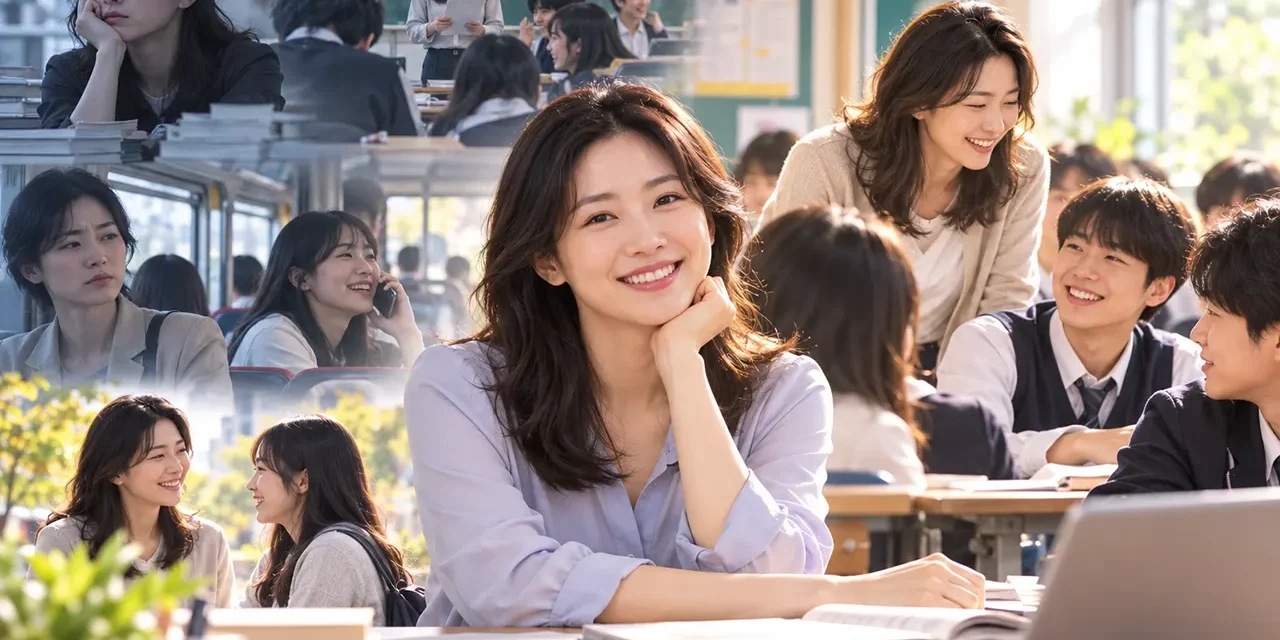
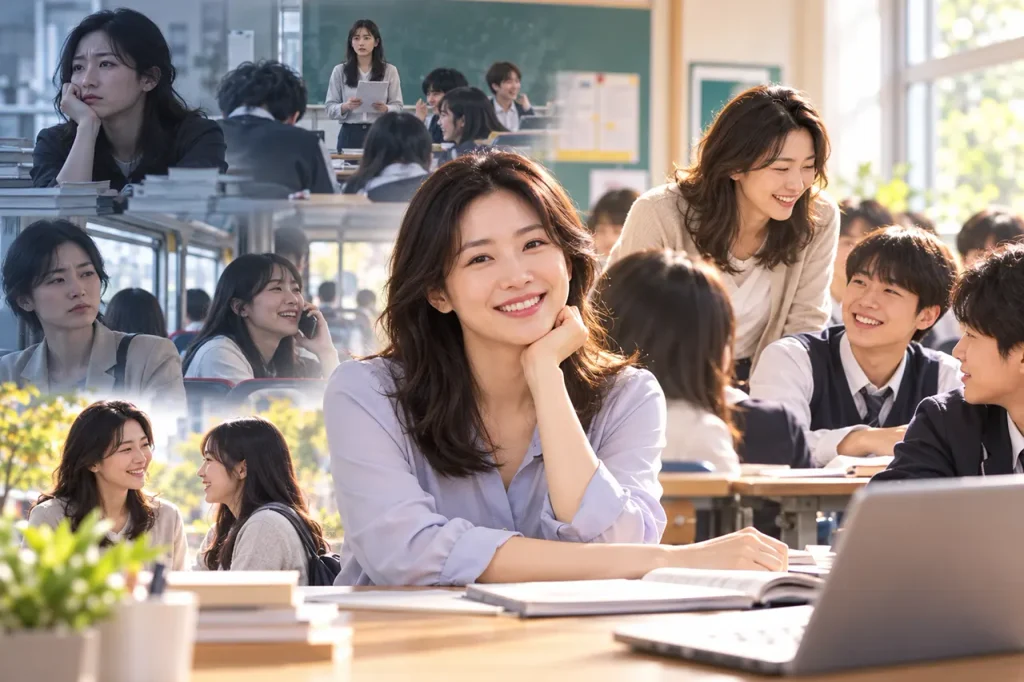
Growing up, Jong S L.’s elementary school classmates gave her the nickname “Fire.” It wasn’t because of a fierce temper, but because her face would turn bright red whenever she had to stand and speak in front of the class.
Even after she grew up and became a school teacher, her timid personality lingered. On the outside, she appeared to be an understanding, kind educator who was deeply involved in religious activities. But on the inside, she was fighting a silent, exhausting battle against her own mind.
This is the story of how an educator who was once lost in feelings of superiority and inferiority used meditation to completely transform her classroom, her family, and her worldview.
The Hidden Burden of Superiority and Inferiority
Despite her outward kindness, Jong’s internal world was a storm of judgment. She worked hard in college and poured herself into religious activities to cure her feelings of emptiness, but nothing seemed to heal her inner conflicts.
She often took her frustrations out on her family, and in the classroom, her hidden judgments dictated her actions. She vividly remembers teaching a notoriously difficult class of ninth-grade girls. They were noisy, formed cliques, and constantly fought. Stress dominated the room. Years later, when she bumped into one of these “problem students” and her mother on the street, the stressful memories came rushing back. Instead of offering a warm greeting, Jong gave a cold, expressionless hello and quickly walked away.
Another time, she spotted a former student on the bus loudly talking on her cellphone to her boyfriend. Instead of feeling happy for the girl, Jong silently mocked her: “She wasn’t even good at studying, yet she already has a boyfriend.”
At the time, Jong was obsessed with improving her own academic credentials, spending all her energy reading English newspapers and taking TOEIC exams. She felt satisfied around “well-behaved” students but looked down on those who struggled academically, even refusing to counsel a student with poor grades because she claimed she was “too busy.” She didn’t realize how disconnected she had become from the actual hearts of the teenagers she was meant to guide.
Confronting the Mind Through Meditation
When her emotional struggles became overwhelming, a fellow teacher recommended she try meditation. It was a turning point.
Through the practice of self-reflection, Jong was finally able to see herself honestly and clearly. She realized that the version of herself she showed to the world and the version hidden inside her mind were completely different. Beneath her polite exterior, she was constantly judging, comparing, and criticizing others.
As she began to discard these accumulated inner thoughts, a remarkable shift occurred. She unexpectedly ran into the same former student from the bus. But this time, something was different. Stripped of her preconceived judgments, Jong sat down and genuinely talked with the young woman.
“What are you studying? Is college difficult? Do you have a boyfriend?”
Strangely, the girl she had once dismissed as having an “empty mind” was actually growing into a thoughtful, sincere young adult preparing for her future. The student even confessed her regrets about not studying harder in middle school. They shared a warm, joyful conversation. In that moment, Jong realized a profound truth: As her mind changed, the entire world around her had changed too.
A New Perspective: Finding Joy in the Classroom and at Home
Today, Jong’s teaching experience is unrecognizable from her past. Recently, she was assigned as the homeroom teacher for a class of ninth-grade boys—a group everyone warned her was particularly loud, rebellious, and difficult to manage.
In the past, she would have looked down on them as troublemakers and fought against them emotionally. Now, she sees them entirely differently. She still disciplines them and guides them when necessary, but she no longer holds negative feelings or grudges afterward. Deep inside, she knows their true nature is as vast and untainted as the universe itself.
Because of this mindset, they maintain comfortable, positive relationships. Her school is no longer a place of stress; it has become a place where people encourage one another, exchange love, and truly feel the joy of living.
This profound peace has extended to her home as well. Her husband and two sons now practice the meditation alongside her, and the conflicts that used to plague their household have practically vanished.
Teacher Jong S L.’s 3 Insights on Education and Life
1. Real Change Starts Within “We often want our students, our families, or our environments to change so we can feel better. But the truth is, the world only changes when your own mind changes first. When I let go of my inner judgments, the people around me suddenly seemed wonderful.”
2. Discipline Without Emotional Baggage “You can correct a student’s wrong behavior without harboring negative feelings toward them. By letting go of my own ego and anger, I can discipline my students properly while maintaining a deep, positive connection with them. It removes the stress from teaching.”
3. See the True Potential in Others “I used to judge students based entirely on their grades and behavior. Now, I understand that their true nature is as vast as the universe itself. When you look at people without your own biased mind, small miracles keep happening endlessly in your life.”
