
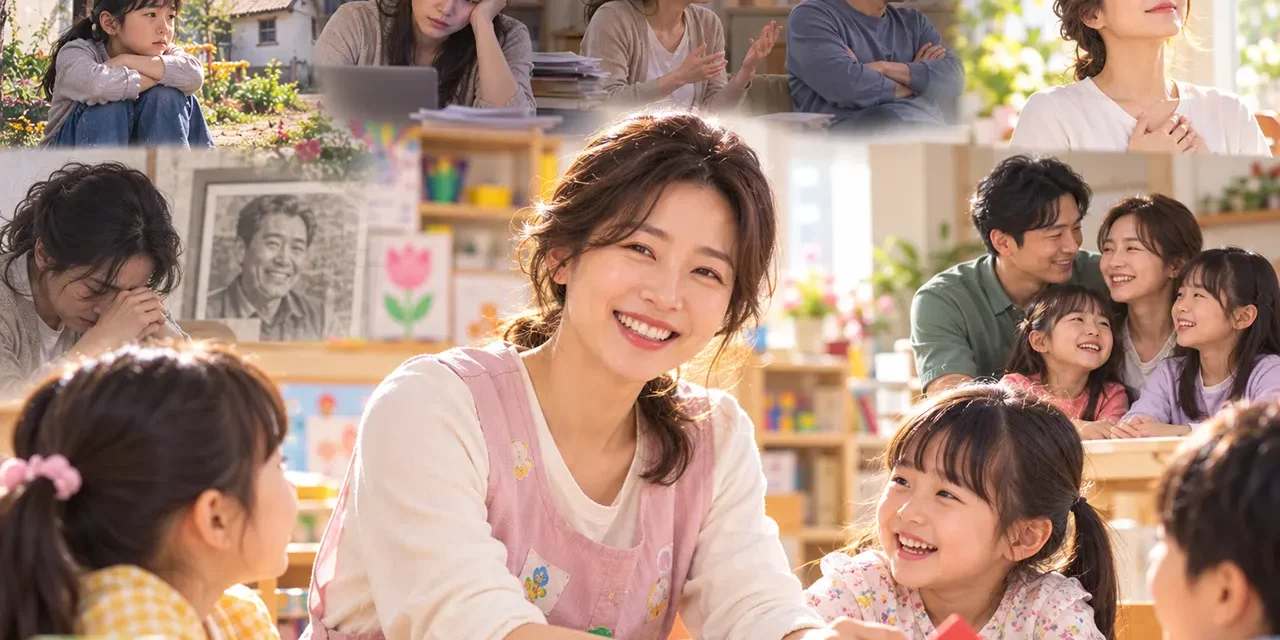
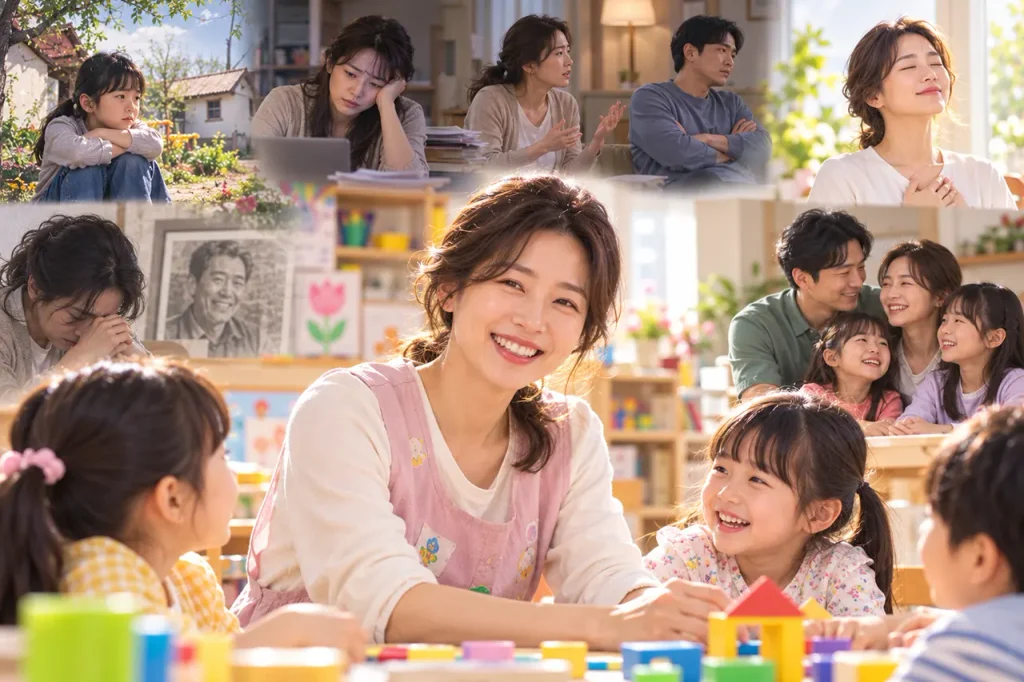
Eun-sook S., a kindergarten teacher, entered her marriage with one fierce determination: “I will live happily. I will not live the way my parents did.”
But despite her strongest intentions, that happiness never materialized. Instead, she found herself trapped in endless arguments with her husband, completely unsure of how to fix their deteriorating relationship. It wasn’t until she tried meditation that she uncovered a painful, hidden truth: she had spent her entire life silently blaming her parents, her husband, and everyone else around her.
This is the story of how confronting her own deeply rooted resentment allowed a struggling mother and teacher to finally break the cycle of unhappiness and fill her home with genuine gratitude.
The Heavy Toll of Childhood Resentment
Until the third grade, Eun-sook lived a comfortable, idyllic life in a house with a small flower garden. But in the fourth grade, her father’s reckless lifestyle plunged the family into severe financial hardship. Forced to abandon her childhood dreams, she began to harbor a deep, silent anger. She blamed her father, other people, and the world itself.
To mask these bitter feelings, she developed a survival mechanism: she pretended to be exceptionally kind, understanding, and considerate. But internally, she admits she had become selfish and calculating. She hated this duplicity within herself but felt powerless to change it.
Repeating the Cycle in Marriage and Parenting
Armed with deeply negative, narrow ideas about what marriage and family looked like, Eun-sook struggled to understand a husband whose personality differed from her own. Constant arguments eventually gave way to total emotional distance; they became colder than strangers.
At work, her perfectionism created a different kind of barrier. Although she tried to hide her stress, her facial expressions were chronically tense and stiff, making her coworkers uncomfortable.
Tragically, she released the bulk of this accumulated stress onto her two daughters. Instead of communicating patiently and listening to their feelings, she constantly pressured them: “Do it faster. Do it better. Act the way I want.” The more she pushed, the more the girls resisted—becoming irritable, hating their studies, and occasionally skipping their academies just to escape the pressure.
Meanwhile, because her husband worked far away and lived apart from the family during the week, her resentment toward him compounded. She constantly criticized him for not helping enough with the chores, complaining, “I’m raising the children alone—what exactly are you doing?”
A Crisis That Forced True Reflection
In June 2005, a family crisis brought everything to a breaking point. Her mother-in-law was diagnosed with terminal cancer, given only three months to live. Her husband quit his teaching job to care for his mother full-time, leaving the family buried under unpaid loans and overwhelming financial anxiety.
During this dark period, a coworker introduced Eun-sook to meditation. Just days into practicing at a local center, she experienced an enormous paradigm shift.
She reflected on her father—the man she had blamed and resented her entire life. For the first time, she realized that he, too, had likely suffered deeply because his life hadn’t gone the way he had hoped. Despite his flaws, he had loved his daughter unconditionally until the day he died. Yet, she had never once tried to understand his heart.
Overwhelmed with pain, she cried for days, silently pleading in her heart, “This foolish daughter was truly wrong. Please forgive me.”
Transforming “Mind Pictures” into Gratitude
As she sincerely reflected and let go of her resentment, profound changes began rippling through her life. Eventually, her husband also started practicing meditation. Now, even when she tells him to rest, he voluntarily steps in to help with the cleaning and dishes. She says his love and consideration now feel incredibly precious.
Her daughters transformed as well. With the heavy pressure of their mother’s expectations lifted, they began taking responsibility for their own tasks and actively trying to support her.
Eun-sook began to notice the love that had actually been surrounding her all along: a strong mother who never burdened her children, in-laws who generously praised her despite her shortcomings, supportive coworkers, and kindergarten students who adored her.
“The only thing I truly did was discard the ‘mind pictures’ made from the fixed ideas and habits I had accumulated throughout my life,” she explains.
As she let go of her mental baggage, her physical health unexpectedly improved without extra exercise. Her slow, lifeless tone of voice became energetic and lively. Today, people who meet her for the first time frequently ask, “You look so peaceful. What’s your secret?” Her world, once dark and painful, is now a bright place where even a gentle breeze, a single tree, or a ray of morning sunlight fills her with absolute gratitude.
Eun-sook S.’s 3 Insights on Healing Family Dynamics
1. You Cannot Hide Resentment “You can pretend to be kind and considerate on the outside, but if you harbor resentment and calculation on the inside, it will eventually poison your marriage and your parenting. True kindness only comes when you empty the mind of blame.”
2. Pressure Creates Resistance in Children “I thought I was helping my daughters by pushing them to be better and faster. In reality, my rigid expectations were just causing them to rebel. When you drop your fixed ideas of how they ‘should’ act, they naturally take responsibility for themselves.”
3. Shift from Blame to Understanding “For decades, I blamed my father for ruining our finances, completely ignoring his own suffering and his unconditional love for me. Most of our family conflicts dissolve the moment we stop judging our loved ones’ flaws and finally try to understand their hearts.”
